


How to Improve VM Execution in Retail Stores
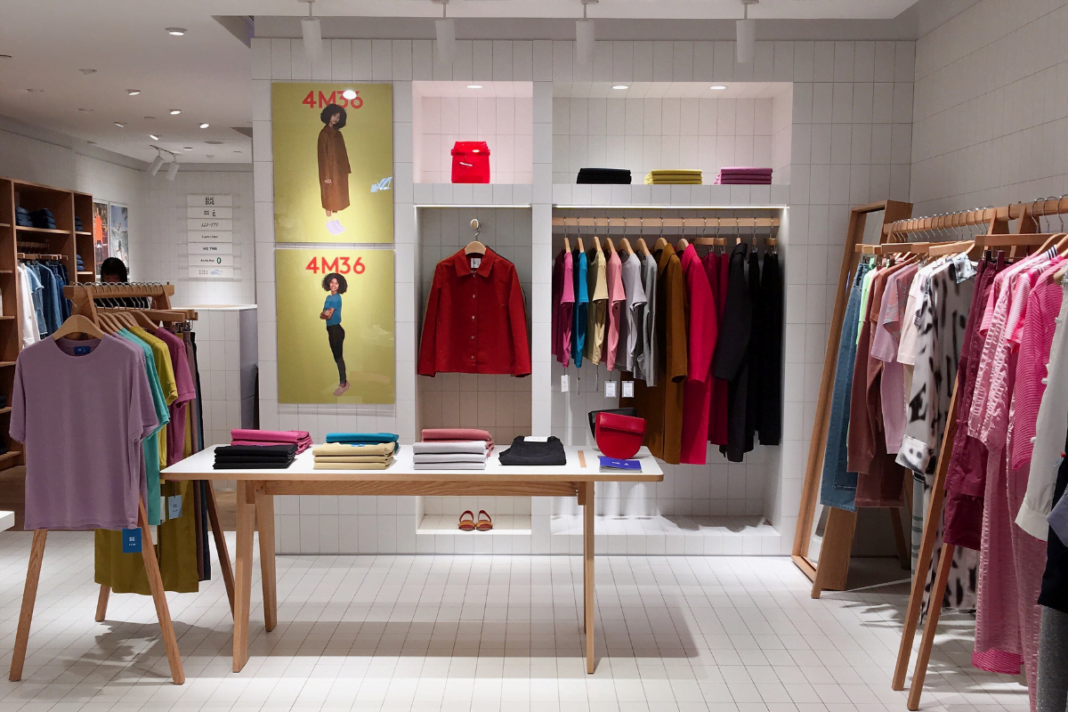
Walk into the head office of almost any retail brand and you’ll find the same confidence.
“We have very detailed VM guidelines.”
“We share clear checklists with stores.”
“Our teams know what to do.”
Now walk into ten random stores from the same brand.
You will see ten different versions of “correct” execution.
This gap is not because store teams don’t care.
It exists because the way we have historically managed Visual Merchandising was never designed for how stores actually work.
VM is not a documentation problem. It is an execution problem.
Over the years, retail teams have responded to VM failures by adding more structure:
- Longer guidelines
- More checklist items
- More frequent audits
- More escalation calls
Yet outcomes rarely improve in a lasting way. Brands using these approaches still see:
- High variation across stores
- Frequent campaign misses
- Escalations consuming leadership time
- Audits catching issues after sales are already lost
The reason is simple. Visual Merchandising behaves very differently from most other store operations.
Why Visual Merchandising is uniquely hard to execute
Inventory, pricing, safety, and attendance are binary. Either something is in stock or it is not. Either a price is correct or it is not.
VM is different. VM is visual, interpretive, and brand-sensitive.
It relies on judgment, not just instruction.
When a checklist says:
- “Align mannequins neatly”
- “Ensure window looks premium”
- “Maintain brand aesthetics”
What exactly does that mean on a crowded Saturday evening, with one staff member on the floor, a missing prop, and a customer asking for a size?
This is where traditional checklists begin to break.
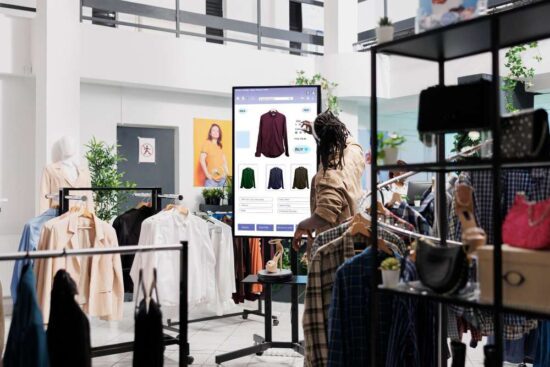
How traditional VM checklists fail in real stores
1. They assume staff already knows what “good” looks like
Most VM checklists are written by experienced teams at head office who carry years of brand context.
Store teams do not.
A checklist may reference a guideline, but that guideline often lives in a PDF, shared weeks ago, rarely revisited. Over time, interpretation replaces clarity.
In networks with hundreds of stores, even small interpretation differences compound into visible brand inconsistency.
This is not a motivation issue. It is a clarity issue.
2. They turn execution into a memory test
Traditional checklists expect store teams to remember:
- Color blocking rules
- Fixture spacing
- Prop combinations
- Campaign-specific changes
Retail floors are dynamic. People rotate. Pressure is constant.
When execution depends on recall rather than reference, inconsistency becomes inevitable. Brands that fixed this stopped expecting memory and started designing for clarity at the moment of action.
3. They separate guidance from execution
In most setups:
- Guidelines live in one place
- Checklists in another
- Audits happen days later
By the time a mistake is flagged, customers have already experienced it.
Retail teams using HipHip saw this clearly. VM failures were not due to unwillingness, but due to the absence of real-time visual guidance and immediate validation while tasks were being executed.
4. They create audit-heavy, escalation-driven workflows
Because checklists do not validate quality, brands rely on:
- Manual audits
- WhatsApp photo chases
- Regional escalation calls
This has two side effects:
- Managers spend time chasing proof instead of improving weak execution
- Store teams focus on defending work instead of fixing it
Brands that moved away from checklist-led VM saw audits drop by ~40 percent, not because standards were lowered, but because execution became clearer and more self-correcting.
5. They completely break during campaigns and scale
Campaign VM exposes checklist weakness faster than anything else.
New layouts. New props. New timelines.
The same static checklist is expected to handle all of it.
In practice:
- Stores prioritize speed over precision
- Interpretation increases
- Head office responds with more reminders
Brands that reworked VM execution systems reported up to 50 percent fewer escalations during campaign rollouts, simply because stores had clearer visual references and faster feedback loops.
What store teams actually need to execute VM well
High-performing retail networks consistently provide three things at the point of execution:
- Visual guidance, not just written instructions
- Simple validation, not delayed audits
- Immediate feedback, not post-campaign reviews
Brands using HipHip redesigned VM around these principles:
- Tasks are supported with visual examples
- Store teams upload photo proof
- AI validates execution against guidelines instantly
- Managers see only exceptions, not everything
The result is not tighter control. The result is calmer operations.
In such setups:
- Manual audits dropped by ~40 percent
- Escalations reduced by ~50 percent
- VM compliance crossed ~90 percent consistently across stores
Most importantly, store teams reported higher confidence, not higher pressure.
Frequently Asked Questions
Why do VM checklists fail in retail stores, even when guidelines are detailed?
VM checklists fail because Visual Merchandising is visual and interpretive, not binary. Text-based checklists assume store teams already know what “good” looks like. In real store conditions, such as staff rotation, time pressure, missing props, or smaller formats, the same checklist is interpreted differently across stores, leading to inconsistency.
How do large retail brands ensure consistent VM execution across hundreds of stores?
Brands that achieve consistent VM execution move beyond static checklists and audits. They provide visual guidance at the point of execution, validate execution using photo proof, and focus managers on exceptions rather than chasing every store. This shifts VM from an instruction-driven process to a verified execution system.
What is the difference between VM compliance and VM execution?
VM compliance answers the question “Was the task completed?”
VM execution answers the question “Was the task executed correctly, as the brand intended?”
Most traditional systems measure compliance. High-performing retail brands focus on execution quality.
As a Head of Retail, how do I reduce VM escalations without increasing audits?
Reducing escalations requires catching execution issues earlier at the store level. Brands do this by validating VM execution in real time through visual proof and automated checks, instead of relying on delayed audits and manual follow-ups. When issues are resolved early, escalation volume naturally drops.
What role does HipHip play in improving VM execution?
HipHip acts as a VM execution system rather than a checklist or audit tool. It helps brands translate VM guidelines into image-led tasks, validate execution through photo proof, and automatically flag deviations. This allows store teams to execute with clarity and managers to focus only on exceptions.
How does HipHip reduce the need for manual VM audits?
By validating VM execution at the point of action using AI-led photo checks, HipHip catches issues before they require audits. Brands using HipHip typically see a significant reduction in routine manual audits, as audits become exception-based rather than the default control mechanism.
Can HipHip help during campaign and seasonal VM rollouts?
Yes. Campaign VM often fails due to time pressure and interpretation gaps. HipHip provides visual campaign-specific guidance and real-time validation, helping stores execute faster and more accurately. Brands using this approach report fewer escalations and smoother campaign rollouts.
Is HipHip meant for store teams, managers, or head office?
HipHip is designed for all three, but in different ways:
- Store teams get clear visual guidance and instant feedback
- Managers get exception-based visibility instead of manual follow-ups
- Head office gets consistent execution data and visual proof across regions
As retail networks scale and customer expectations rise, VM can no longer rely on static instructions and delayed audits. The future of Visual Merchandising belongs to brands that treat VM as a guided, validated execution system, not a list of tasks to be checked off.
Retail leaders looking to modernize VM execution beyond traditional checklists can reach us at [email protected].