


NPS Should Be Measured by Time, Not Just by Store

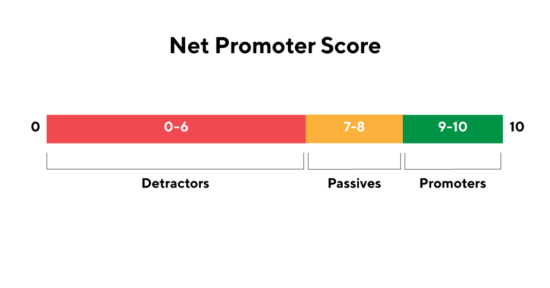
Net Promoter Score has become a standard health metric across retail networks.
Most leadership teams review it by store, by region, or by format, looking for persistent underperformers or best-in-class locations.
While useful, this view is incomplete.
Based on our experience working with large, multi-store retail brands, NPS variation is often driven less by where the customer shopped and more by when they shopped. Morning shoppers, evening shoppers, and weekend shoppers experience the same store very differently, even though the location, assortment, and brand promise remain constant.
When NPS is averaged at the store level, these differences disappear.
The Hidden Volatility Inside a “Stable” NPS Score
A store with an NPS of 55 may appear healthy. What that average often hides is volatility across the day.
Across multiple retail formats, time-based analysis frequently reveals:
- 10–20 point swings in NPS between peak and off-peak hours
- Consistent dips during specific windows, such as late evenings or weekend rush periods
- Strong performance during low-stress windows that offsets poor peak-hour experiences
From a reporting perspective, the store looks stable.
From a customer perspective, the experience is inconsistent.
Why Customers Experience the Same Store Differently
Customer expectations do not change by the hour.
Execution conditions do.
Time-based NPS drops typically correlate with:
- Higher footfall density
- Longer queues and waiting times
- Reduced staff availability in assisted categories
- Slower replenishment and housekeeping response
- Increased operational load on store teams
In internal analyses across retail chains, peak-hour execution strain explains a significant share of negative NPS feedback, even in stores that perform well overall.
This suggests the issue is not brand perception or assortment, but moment-specific execution breakdowns.
Why Store-Level NPS Is a Blunt Instrument
Store-level NPS answers one question well: “Which locations are persistently underperforming?”
It does not answer:
- When do customers have the worst experience?
- Are issues structural or situational?
- Do problems require redesign or better timing of resources?
As a result, retailers often respond with broad initiatives:
- Staff retraining
- Process redesign
- Experience programs rolled out uniformly
These interventions are expensive, slow to implement, and often misaligned with the actual problem.
Time-Based NPS Is More Actionable
When NPS is analysed by time of day, day of week, or trading window, patterns become clearer.
Retailers begin to see:
- Predictable NPS dips during high-stress periods
- Windows where experience consistently outperforms
- Stores where issues are episodic, not chronic
In several networks, shifting from store-level to time-based analysis has helped narrow corrective action to specific 1–3 hour windows, rather than entire locations.
This dramatically improves the precision of intervention.
How Leading Retailers Use Time-Based NPS
High-performing retailers treat NPS as a temporal signal, not a static score.
They:
- Track NPS by trading window
- Compare peak vs non-peak experience
- Align staffing, support, and supervision to high-risk periods
- Measure whether targeted changes improve NPS during specific windows
In practice, this often leads to:
- Faster improvements without large-scale programs
- Better ROI on staffing and operational adjustments
- More credible explanations for why NPS moves
In several cases, retailers have seen 5–10 point improvements in peak-hour NPS without changing store design or headcount, simply by addressing timing mismatches.
For retailers evaluating how time-based NPS analysis, combined with execution visibility, can improve decision-making across store networks, you can reach us at [email protected].