


Why Queue Mismanagement Is the Fastest Way to Lose Sales
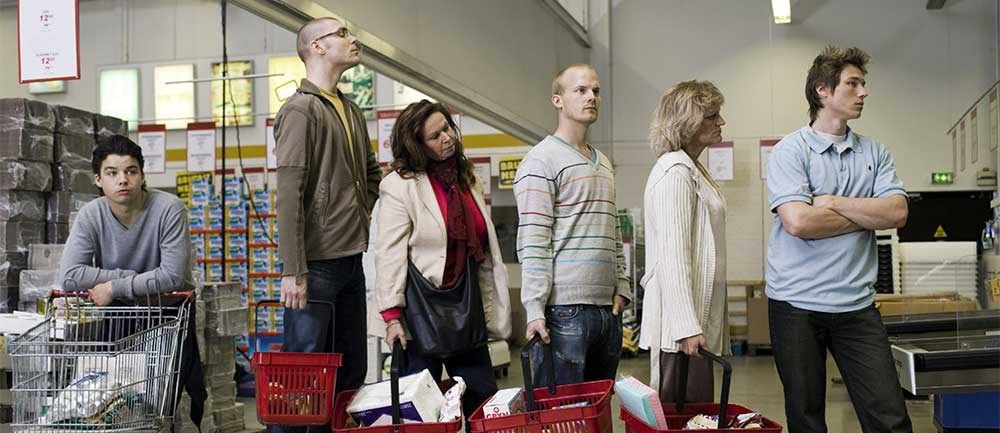
Queues form faster than most retailers realise. In many formats, especially convenience, pharmacy, quick commerce, and high-footfall urban retail, a delay of even a few minutes can materially affect conversion. By the time a queue becomes visibly problematic, sales loss has often already occurred.
What makes queues particularly costly is not their length, but their invisibility. They emerge and dissolve within minutes, often outside the scope of traditional reporting. As a result, most retailers underestimate both how frequently queues occur and how much revenue they quietly erode.
This is not primarily a staffing problem. It is a decision-latency problem.
Queues Are a Conversion Sensitivity Issue, Not a Customer Service One
Customer tolerance for waiting has declined steadily. Today, conversion is highly sensitive to short delays, especially in formats where purchases are routine or time-bound.
Industry observations consistently show that:
- A 3 to 5 minute wait can reduce conversion meaningfully in high-frequency retail
- Customers rarely complain or escalate; they simply leave
- Lost transactions are rarely attributed back to queueing in post-facto reports
From a CXO perspective, this makes queues dangerous. They do not surface as customer dissatisfaction, operational incidents, or staffing alerts. They surface only as missed revenue.
Why Queues Go Unnoticed at Scale
Most retail organisations rely on a combination of:
- Staffing rosters and shift plans
- Periodic audits
- Sales and conversion reports
- Store manager feedback
Individually, these tools are useful. Collectively, they fail to capture moment-level execution breakdowns.
Queues are transient by nature. They form during billing surges, delivery overlaps, short staffing gaps, or uneven task sequencing. Because these moments are brief, they often escape audits and manual reporting entirely.
From a system perspective, this creates a blind spot:
- Coverage may look adequate on paper
- Conversion may look healthy at an aggregate level
- Yet meaningful leakage occurs during unobserved micro-events
This is why queue-related losses persist even in well-managed retail networks.
Why Traditional Reporting Fails to Explain the Problem
Most reporting frameworks focus on outcomes:
- Sales uplift
- Conversion by store or region
- Average transaction value
While useful, these metrics explain what happened, not why it happened.
Queue-related losses do not show up cleanly in these views. They are diluted across time, stores, and categories. Without execution-level signals, leadership teams are left making decisions based on lagging indicators.
This is why queue issues are often discussed anecdotally rather than addressed systematically.
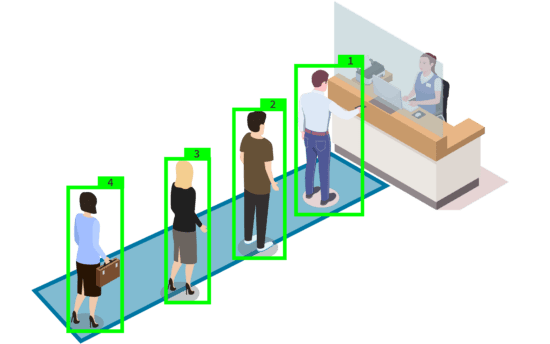
How Camera Analytics Changes the Equation
Camera analytics introduces a fundamentally different layer of visibility.
Instead of relying on static schedules or delayed audits, retailers can observe:
- When queues form during store hours
- How long they persist
- Which zones or counters are most affected
- How queue duration correlates with conversion and dwell behaviour
Most importantly, this visibility is continuous, not episodic.
When queues are measured consistently, patterns begin to emerge:
- Specific times of day when congestion is predictable
- Stores or regions where queue frequency is structurally higher
- Operational triggers that consistently precede queue formation
What was previously anecdotal becomes measurable.
From Visibility to Action Without Adding Cost
Once queue behaviour is visible, corrective action does not require sweeping changes.
In many cases, retailers see measurable improvement through:
- Minor shift overlap adjustments
- Re-sequencing non-customer-facing tasks
- Temporary redeployment during predictable peaks
- Early intervention before queues reach abandonment thresholds
These are low-cost, operationally realistic changes. Yet they are difficult to implement without objective, real-time insight.
For CXOs, this is where queue management shifts from reactive firefighting to predictable execution control.
For retailers evaluating how camera analytics can be applied within their store environments to improve execution visibility, you can reach us at [email protected].