


Why Help Requests Go Unnoticed on the Shopfloor
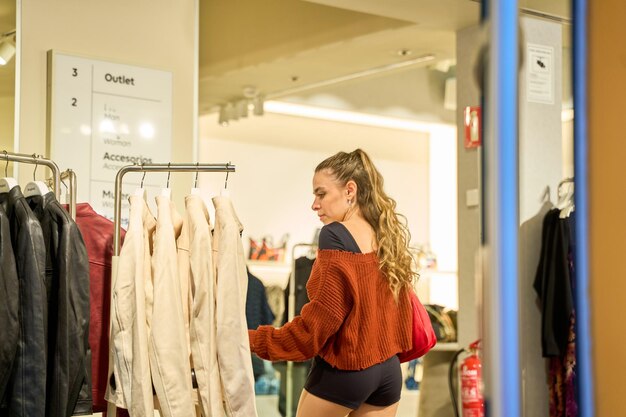
Most retailers assume that when customers need help, they ask for it.
Across large store networks, this assumption quietly drives avoidable revenue leakage.
In assisted and premium categories such as electronics, beauty, wellness, and high-value apparel, purchase decisions are rarely instantaneous. Customers pause, compare, hesitate, and look for reassurance. If assistance does not arrive at the right moment, many abandon the purchase altogether.
Internal analyses across multi-store retail formats consistently show that 5–15% of potential conversions in assisted categories are lost due to missed engagement, even when stores appear adequately staffed.
The Gap Between “Staffed” and “Assisted”
At an operational level, most stores look well covered. Rosters are filled, shifts are assigned, and staff are present on the floor.
The issue is not staffing levels. It is timing and visibility.
Across retail networks, camera-based observations typically reveal that:
- Staff are physically present in priority zones only 60–75% of store hours
- Short gaps occur frequently, often lasting 2–7 minutes at a time
- These gaps cluster around peak decision moments, not off-peak hours
From a planning perspective, coverage appears sufficient. From a customer perspective, assistance is unavailable when it matters most.
Why Customers Rarely Ask for Help Anymore
Customer behaviour has changed.
Across assisted retail formats:
- Fewer than 20–30% of customers explicitly ask for help
- Most signal need through non-verbal cues such as hesitation, repeated shelf interaction, or prolonged dwell
- If engagement does not occur within a short window, abandonment rates increase sharply
This makes verbal help requests a poor proxy for actual demand. Retailers relying on staff-initiated interaction or customer prompts systematically underestimate unmet assistance needs.
Why Surveys and NPS Do Not Capture the Problem
Traditional feedback mechanisms focus on remembered experiences, not missed ones.
Missed assistance rarely appears in:
- NPS or CSAT scores
- Post-purchase surveys
- Complaint logs
Customers who leave without buying often do not register dissatisfaction. As a result, leadership teams see stable experience metrics while conversion in assisted categories quietly underperforms.
In several retail networks, internal reviews have shown no correlation between NPS and assisted-category conversion, masking execution gaps on the shopfloor.
The Economics of Micro-Moments
Help requests are not events. They are micro-moments.
Typical patterns include:
- Dwell exceeding category averages by 30–60%
- Multiple product touches without decision
- Entry into a premium zone followed by exit without engagement
These moments often last 15–90 seconds. They are easy to miss in real time but materially influence outcomes.
Across retailers using behavioural analytics, conversion probability drops by 20–40% once these hesitation windows pass without engagement.

Why Human Observation Does Not Scale
Store teams and managers are not inattentive. They are constrained by scale.
In networks with hundreds or thousands of stores:
- Manager presence is intermittent
- Observation quality varies by individual
- Peak trading hours reduce situational awareness
- Patterns are anecdotal, not measurable
As a result, help gaps are discussed qualitatively but managed inconsistently.
How Camera Analytics Makes Help Requests Measurable
Camera analytics changes the problem from subjective observation to measurable signal.
Instead of tracking explicit requests, retailers can monitor:
- Dwell duration by zone and SKU cluster
- Staff visibility during high-intent moments
- Repeated engagement without assistance
- Correlation between staff presence and conversion
Over time, this reveals patterns such as:
- Zones where hesitation is structurally high
- Times of day when assistance gaps peak
- Stores where engagement underperforms despite similar staffing
What was previously invisible becomes operational data.
For retailers evaluating how camera analytics can be applied within their store environments to identify and act on missed engagement moments, you can reach us at [email protected].