


Replenishment Breakdowns Start With Visual Blind Spots
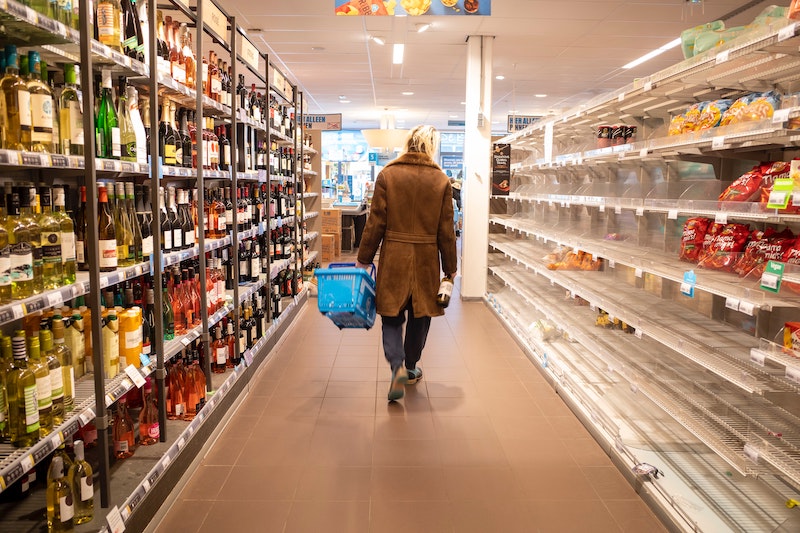
Inventory replenishment is rarely a planning problem. In most retail networks, assortment planning, reorder logic, and warehouse availability are already in place.
Yet shelves still go empty.
Across formats such as grocery, convenience, pharmacy, electronics, and fashion, replenishment misses are most often caused not by stock unavailability, but by missed visibility at the store level.
Based on our experience working with numerous retail brands across categories, a large share of replenishment failures begin with a simple issue: staff did not notice the shelf emptying early enough.
Reality of High-Velocity Shelves
High-velocity SKUs behave differently from slow movers.
They experience:
- Faster depletion
- Higher customer interaction
- Greater visual disruption
In many retail chains:
- 30–50% of daily replenishment misses originate from the top 10–15% of SKUs
- These SKUs are often located in high-traffic zones where disruption happens rapidly
- Shelves can move from “acceptable” to “broken” within 30–90 minutes
From a store manager’s perspective, the shelf was “fine earlier”.
From a customer’s perspective, the shelf is already empty.
Why Human Observation Does Not Scale
Store teams are not inattentive. They are constrained.
In a typical store environment:
- One associate monitors dozens of shelves
- Customer service, billing support, and housekeeping compete for attention
- Visual checks happen intermittently, not continuously
As a result, replenishment action is usually reactive.
Internal reviews across retail networks often show that:
- Staff respond only once a gap becomes obvious
- Early depletion stages go unnoticed
- The costliest stock-outs are the ones that were visible briefly, then missed
Traditional audits and manual checks simply do not operate at the speed of high-velocity shelves.

Cost of “Late” Replenishment
Not all stock-outs are equal.
A shelf that is empty for 10 minutes behaves very differently from one that is empty for 2 hours.
Across categories:
- Even 15–30 minutes of stock-out in high-velocity SKUs can materially impact daily sales
- Customers substitute, postpone, or abandon purchases
- Repeated exposure to broken shelves erodes store perception over time
In several large formats, internal data shows that up to 20% of lost sales from stock-outs occur before teams are even aware a problem exists.
By the time replenishment happens, the damage is already done.
Replenishment Is a Visibility Problem, Not a Manpower Problem
A common reaction to replenishment issues is adding checks or increasing staff responsibility.
In practice, this rarely scales.
What changes outcomes is earlier detection, not harder effort.
Retailers that improve replenishment performance focus on:
- Detecting shelf disruption as it begins
- Acting before the gap becomes obvious to customers
- Prioritising high-velocity SKUs and zones
This shift consistently delivers better results than increasing audit frequency or staff workload.
How Camera Analytics Fixes This
Camera analytics introduces continuous visibility where manual checks cannot.
Instead of relying on human observation, retailers can:
- Monitor shelf state in high-traffic zones
- Detect partial depletion before full stock-out
- Track how long shelves remain disrupted
- Prioritise action based on velocity and impact
Across deployments, retailers typically uncover that:
- The same shelves break repeatedly
- Gaps cluster around specific times of day
- Replenishment delays are structural, not random
What was previously anecdotal becomes measurable.
For retailers evaluating how real-time visibility and camera analytics can strengthen replenishment execution across stores, you can reach us at [email protected].